Service
Custom CRM and ERP — you own the system.
A CRM or ERP is the internal system that keeps a company’s customers, orders and money in one place. Built from scratch it typically takes 2–4 weeks, or 1–2 months for a complex platform. After a short brief we come back within 3–5 days with an architecture, a stage plan and a firm quote, and that stage is not billed.
- Typical build
- 2–4 weeks
- Estimate
- 3–5 days
- Warranty
- 3 months
What you get and what you own
Start with ownership. On a subscription platform you rent the system: the data sits in someone else’s account, the per-seat price rises as you hire, and whatever the vendor never modelled ends up in a spreadsheet beside it. A custom build puts the repository in your account on day one, the database on infrastructure you control, and no monthly fee tied to headcount.
That is the trade: a longer start and a technical partner for the roadmap.
But for a team of three closing a handful of deals a month, it is a bad trade. For a company whose process is the actual product — a specific pricing rule, a specific approval chain, a market requirement no off-the-shelf tool covers — it usually pays for itself inside the first year.
One team across the whole cycle: process analysis, data model, interface, integrations, migration, release and support. No handoff between an agency that draws and a contractor that builds — which is where most of the cost, and most of the finger-pointing, lives on projects this size.
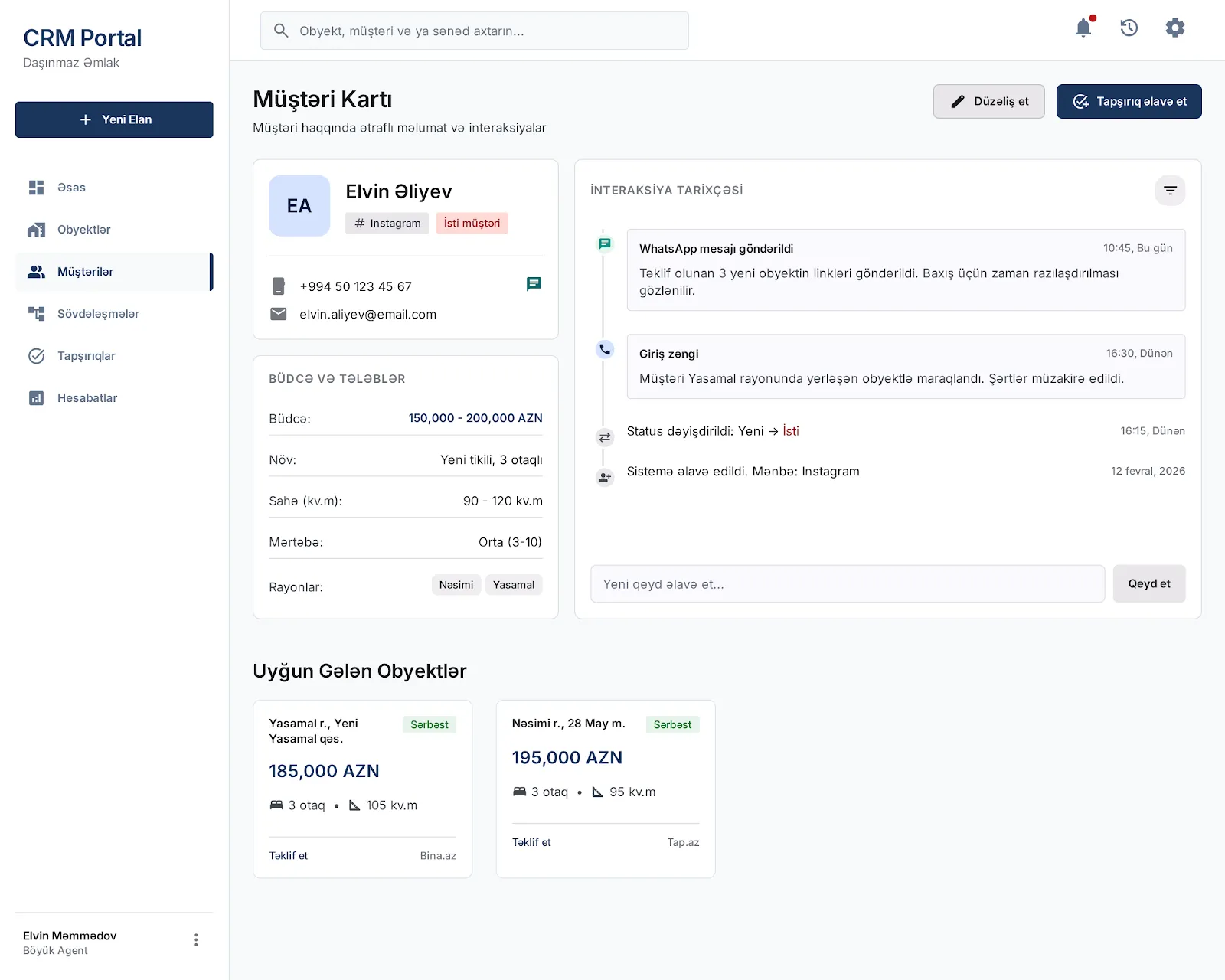
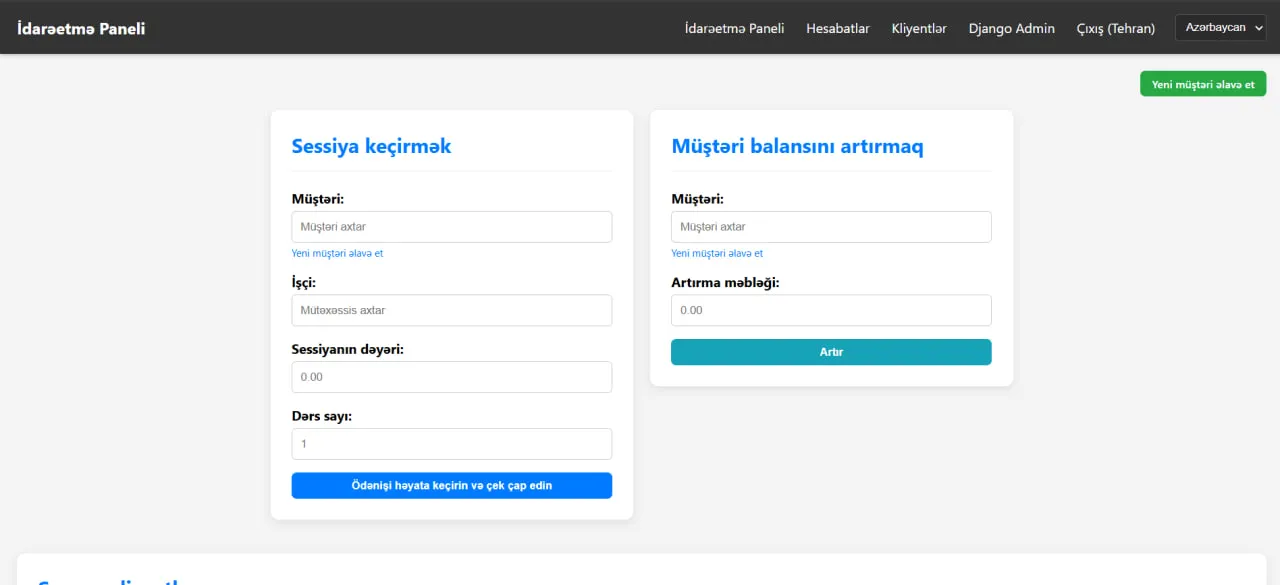
Two finished builds sit behind this page. CRM Portal for real-estate agencies — a listings database, a Kanban pipeline and WhatsApp integration, with sales conversion up 45% and the time spent updating the database down 70%. FLEKS, an ERP for a psychology centre — client balances, session charges and automatic PDF receipts, with payment and receipt handling down 80%. Each client measured those figures after launch, not us.
What the work covers
Included
- Business process analysis and a written specification
- Data model and system architecture
- Interface design and responsive layouts for every screen
- Roles and access control
- Sales pipeline, order flow or document workflow
- Reporting and an analytics dashboard for management
- Migration from your current database
- Functional and load testing
- Team training and documentation
Not included
- Server and hosting subscriptions
- Third-party service licences
- Filling the catalogue and product records
- Running advertising campaigns
- Doing the bookkeeping itself
What you receive
- A working system on your domain
- The repository in your account
- Technical documentation and API reference
- A short video walkthrough for admins
- Deploy and rollback scripts
- Monitoring and a 3-month warranty
What drives the price
We do not publish a price list. The same word — CRM — covers a two-week project and a six-month one. Here is what moves a quote.
- Number of roles: sales only, or sales plus management, warehouse and a customer portal
- Integrations: 1C, payment providers, WhatsApp, telephony — each one is its own scope
- Volume and state of the data to migrate: a clean spreadsheet or ten years of legacy records
- Reporting complexity: fixed tables, or figures calculated from conditional rules
- Mobile: whether responsive web is enough or a separate app is required
After the brief you get the architecture, the stages and a firm quote within 3–5 days. That stage is free and commits you to nothing.
Stack
Chosen per project. These are what we reach for most often on CRM and ERP work.
Backend
- Django
- FastAPI
- PostgreSQL
- Celery
Frontend
- React
- Next.js
- TypeScript
Integrations
- REST API
- Webhooks
- WhatsApp API
- 1C
Infrastructure
- Docker
- Nginx
- CI/CD
- Monitoring
Stages
-
Brief and process analysis
3–5 daysWe write down who does what by hand, where the data actually lives, and which step eats the most time.
-
Architecture and specification
2–4 daysData model, roles, the integration list and a quote broken down by stage. The price does not move after this.
-
Design and prototype
3–6 daysLayouts for the main screens. The process is signed off on a clickable prototype, before a line of code is written.
-
Development, two-week sprints
1–2 weeksA working demo at the end of every sprint. Tracker and repository on your side; the work is visible daily.
-
Migration, testing and release
3–6 daysData is migrated, load tests are run, the team is trained. Launch with a rollback path if anything goes wrong.
-
Warranty and support
3 monthsMonitoring, bug fixes and roadmap work. After that a support plan or your own team — the system is yours either way.
When you do not need this
Sometimes a custom CRM is three months and a budget that changed nothing. The checks we run before taking a project on.
Fewer than 20 deals a month
At that volume a tidy spreadsheet and calendar reminders do the same job, and they do it today. A system starts paying for itself where tracking by hand stops being physically possible: when the cards no longer fit in one person’s head, when a forgotten call costs real money. Twenty deals is not that.
A team of one or two
Nowhere for information to fall. An off-the-shelf tool will be cheaper and faster.
The process is still changing
A new way of working every month, and the system will set yesterday’s way in concrete. Stabilise the process first, automate second, or you will pay to rewrite it.
A boxed product fits as-is
If your process matches the amoCRM or Bitrix24 model, there is no reason to build — we will say so on the brief and suggest configuration instead of development.
If one of those describes you, write anyway. We will tell you for free what is worth doing instead; sometimes the answer is “nothing yet”.
Related work
Frequent questions
Would configuring an off-the-shelf CRM be cheaper?
Often yes, and we say so directly. A boxed CRM — amoCRM, Bitrix24 and the like — starts in a week and costs a predictable amount. It gets expensive later: plugins, an integrator, a subscription that grows with every seat. A custom build starts slower, 2–4 weeks, and in return the code and the data stay yours with nothing charged per seat. On the brief we cost both routes and show you the difference.
Will data from the old system be lost?
No. Migration is its own stage: a trial run first, then reconciliation, then the real migration. The old system runs in parallel the whole time. We switch it off only once you have checked the result and agreed to it.
Can you integrate with 1C and payment providers?
Yes, with any service exposing an API or a webhook: 1C, amoCRM, Bitrix24, payment systems, WhatsApp, telephony. Each integration is a separate line in the quote — there are no hidden additions.
Who supports the system after release?
Three months of warranty from us: monitoring and bug fixes. After that either a support plan or your own team — the repository and the documentation are yours from day one, so there is no lock-in.
How do I see progress?
Sprints run two weeks, each one ends in a working demo, and tracker access is yours from day one.
Tell us about the task
A short brief is enough: what you work with, how many people are involved, what is being lost today. We come back within 3–5 days with an architecture and a quote.